

Request info Apply now

Florence: Arts, Humanities, & Culture

Florence, Italy

Courses

Italian language

Instructors: Linguaviva staff
Required course, 4 credits

Classes are taught in Italian at Linguaviva, an Italian language institute in Florence. Instruction emphasizes spoken colloquial Italian and is most intensive during the first four weeks so that students may quickly acquire conversational ability. Classes are taught completely in Italian. Students who have previosuly studied Italian will be placed in language classes appropriate to their levels of proficiency.  The Linguaviva instructors are not just language teachers but also rich sources of information about Italian culture, and they help students solve the daily problems which Italians and foreigners share.

Florentine Family Palaces and Funerary Chapels

Instructor: Janet Smith
Elective course, 4 credits

Click here to see a course syllabus

Over the centuries Florentine families have owned two principal homes, one for the living and another for their dead. Huge palaces line the narrow streets with formidable stone facades which proclaim the status of the family and shield it from indiscreet eyes. Their funerary chapels stand shoulder to shoulder along the walls of neighborhood churches, behind wrought iron grates which keep out intruders but allow the visitor to admire elaborate fresco cycles, marble and porphyry tombs and personalized altarpieces. Prayers offered on these altars would help the souls of the dead relatives to affront the punishments of purgatory and climb the Dantesque mountain towards heaven. Family coats-of-arms prominently adorn both abodes. We also will look briefly at the third family dwelling – the country villa. This course will study four centuries of these manifestations of family history and pride in terms of religion, politics, economics, gender, sociology and, of course, art history. The artists involved will be familiar ones: Giotto, Brunelleschi, Masaccio, Donatello, Botticelli, Ghirlandaio, Michelangelo. The families, too, are well know: Medici, Strozzi, Bardi, Pazzi, Corsini – to name a few. Almost all the classes will be on-site. At the end of the course students will do power point presentations of their particular topic of research.

The Politics of Art in Renaissance Florence

Instructor: Gail Solberg
Elective course, 4 credits

Click here to see a course syllabus

Major monuments of the Florentine Renaissance, notably those of a religious nature, were sponsored by groups or individuals whose aims were to a large degree political. This course looks at a variety of material asking where political motivation lies. We start with the layout of the city and then focus on conspicuous buildings, including the cathedral, major churches, and civic structures, particularly the town hall. Next we move inside to look at the subdivision of large spaces, such as the various areas of a grand religious edifice, and their still smaller units which are family chapels. Finally we scrutinize single objects or decor such as fresco cycles, altarpieces and tombs to discover the implicit (political) messages embedded in the visible forms.

The course presents architecture, painting and sculpture with a heavy emphasis on the latter two media. It privileges the 14th century background to great developments in the 15th century, arguing that the much-noted political brokering of the famous Medici family was based on patterns of behavior and art sponsorship established earlier.

The Strange Art of Sixteenth-Century Italy

Instructor: Janet Smith
Elective course, 4 credits

Click here to see a course syllabus

The second half of the fifteenth century, a period of relative peace in Italy, was followed by political and religious upheaval which had serious consequences for art. The apocalyptic sermons of the Dominican reformer Savonarola, during the early 1490s, and the 1494 invasion of Italy by the French king, Charles VIII, initiated the new era. German and Spanish troops under the emperor Charles V wrecked a devastating sack on the city of Rome in 1527. The religious reform movement became so strong in northern Europe that it threatened the foundations of Catholicism. A series of popes had to rise to the Protestant challenge.

At the beginning of the 1500s Leonardo, Raphael and Michelangelo competed for center stage, but after 1520 Michelangelo was left to dominate the rest of the century. Other prominent artists were Pontormo, Rosso Fiorentino, Bandinelli, Cellini, Ammannati, Vasari, Parmigianino, Titian, Tintoretto and Giambologan. All had to reconcile the humanist world of classical ideas and models with reformed Catholic beliefs. This struggle is particularly evident in Michelangelo but affects most of the art of this tormented period, characterized by self-reflection. In some cases art became temporarily detached from content – "art for art’s sake" – and in others it took bizarre forms in masks, grotesque designs, weird garden sculptures. It was always full of flair and often deliberately ambiguous. The course will meet predominately on site. Student presentations will investigate this fascinating artistic period.

Studio Art: Drawing the Human Figure

Instructor: Staff of the Charles H. Cecil Studios
Elective course, 4 credits

This course will teach a historic technique for drawing from a live model, from casts of famous statues and from the city itself. Live models will be used for full figure drawing and casts for portraiture. Classroom instruction will take place in the Charles H. Cecil Studios, the most historic Florentine atelier still in active use. Students will also work with sketchbooks around Florence.

Celebrating the City: The Image of Florence as Shaped Through the Arts

Elective course (Fall 2010), 4 credits

Click here to see a course syllabus

The citizens of renaissance Florence proclaimed the power, wealth and piety of their city through the arts, and left a rich cultural heritage that still surrounds Florence with a unique and compelling mystique. This course will examine the circumstances that fostered such a flowering of the arts, the works that were particularly created to promote the status and beauty of the city, and the reaction of past and present Florentines to their extraordinary home.  In keeping with the ACM Florence program's goal of helping students to "read a city", we will frequently use site visits as our classroom. These will be combined with lectures, discussion, readings, videos, and interviews to shape a picture of the role of the arts in Florentine civic pride.  During the semester students will: gain an understanding of the social and political context of Florence's artistic growth; become familiar with some of the architectural and artistic treasures of Florence and their historical background; become observant of the ways in which the arts can promote political or other agendas; view a one-act opera that portrays Florentine family and civic pride and numerous other characteristics of early renaissance Florence; investigate the effect of Florence's historical and cultural heritage upon its current citizens; and write about and discuss their own reactions to the art and history of the city.

The Professional Artist in Renaissance Florence

Elective course (Fall 2010), 4 credits

Click here to see a course syllabus

This course will examine the professional life of the renaissance Florentine artist, from his apprenticeship in a workshop to the production of works for important patrons. Among the topics to be considered are the relationship between masters, assistants and apprentices, the guild system that fostered and controlled artistic output, agreements and balance of power between patrons and artists, and the socio-economic conditions that contributed to the growing demand for art and the elevation of the artist's status from craftsman to independent creator. These and other matters related to the practical life of the artist will be addressed through a combination of lecture, discussion, site visits, and readings from primary and secondary sources.
During the semester students will: gain an understanding of the role of the artist and his work in the society of renaissance Florence; consider the purposes served by art and the reasons patrons paid for it; gain an understanding of some of the techniques and materials of the renaissance artist and the training regimen of the artist; become observant of the ways in which materials and techniques are used in works by great artists; consider the role of the artist as craftsman and individual creator; and observe artists and artisans who are maintaining some of the same techniques used in the renaissance.


ACM students singing an Italian song and dancing, after their final Italian language class.

Florence: Arts, Humanities, & Culture

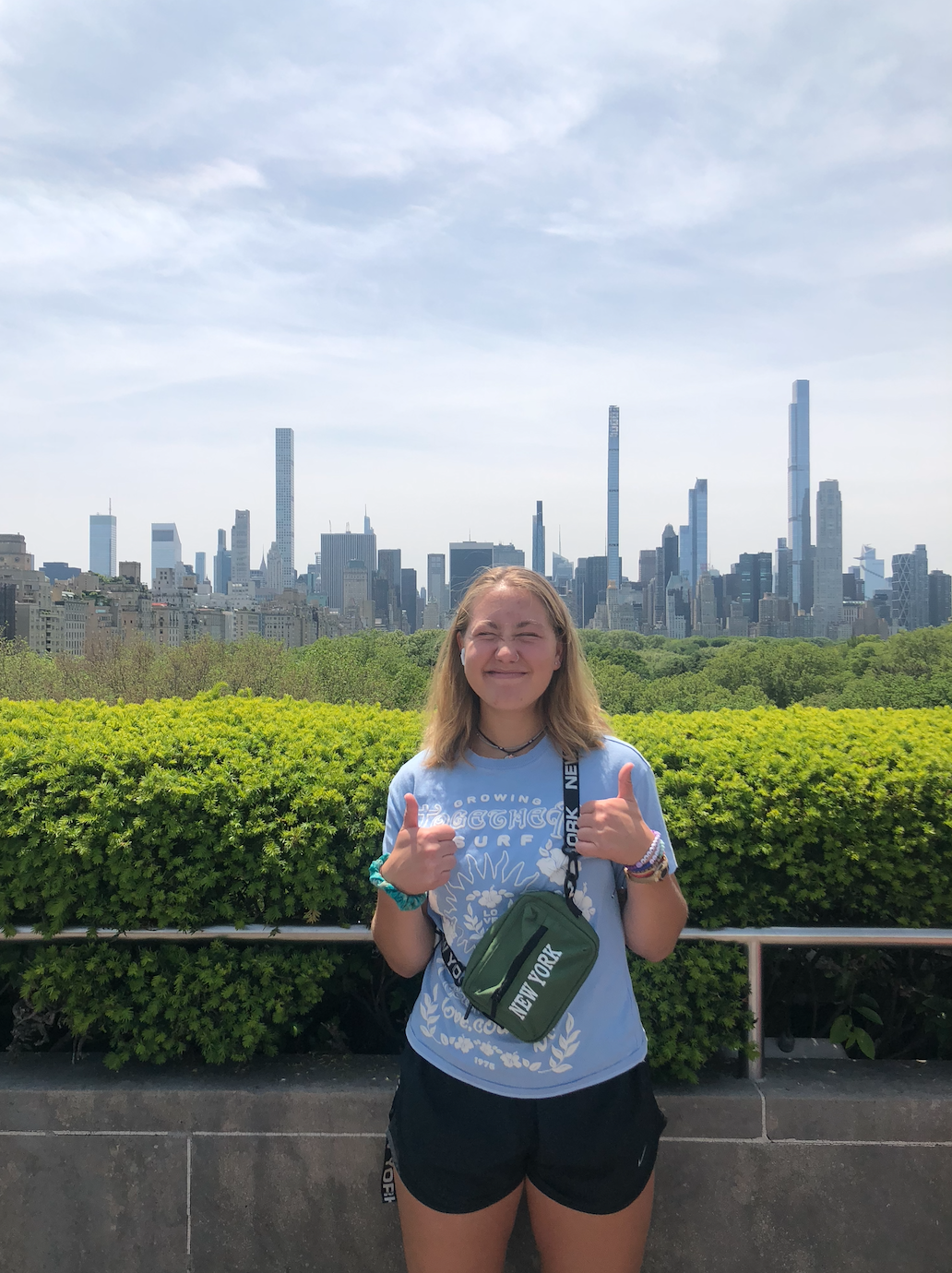
Amelia Sternitzky I chose to go on the ACM Florence program because learning how to speak Italian has always been my dream. The art history aspect was not an interest of mine going into it, but by the end of my semester in Italy, I had completely fallen in love with the subject. Over the course of the four months that I was there, I learned so much, not only about Italy and art history, but more importantly about who I am as a person and who I want to be. In the time since I have returned from Florence, not a day goes by that I do not miss it - the people, the classes, the culture, the food, and most of all, my wonderful host mother, Anna, who made the entire experience completely unforgettable!

—Amelia Sternitzky, Florence Program, Fall 2007

Read more testimonials »