
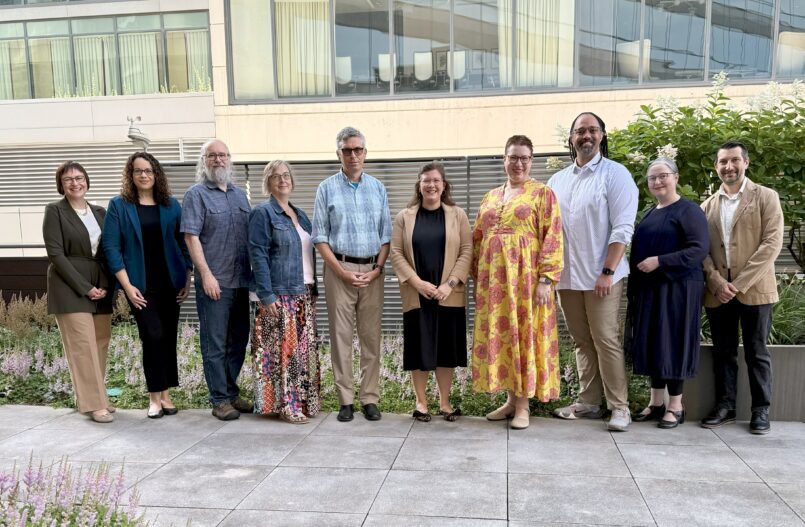
The immersive professional development gathering brought together emerging academic leaders from three liberal arts consortia.
The 2025-2027 cohort of ACM Academic Leadership Fellows gathered for the first of two summer institutes designed to hone their incredible promise as leaders in higher education. Held in downtown Chicago in late July, the institute served as a professional incubator for emerging leaders representing nine campuses of the Associated Colleges of the Midwest.

Benjamin Zeller, the chair of the religion department at Lake Forest College and one of the 10 current ACM Academic Leadership Fellows, said the summer institute and other program activities are providing the fellows with vital insights during a period of significant change in their careers. Zeller noted emerging leaders often must confront a learning curve as they move from scholarly and teaching roles into new positions—whether as department chair, associate dean, associate provost, or another leadership role.
“ACM is providing valuable mentorship and guidance to us on our leadership journeys,” Zeller said. “The summer institute has provided me a rich network of fellow academic leaders—creative and energized thinkers—who inspire me and will be resources for years to come.”
The prestigious two-year program offers tenured faculty in the arts, humanities, and humanistic social sciences the opportunity to gain skills and knowledge in areas such as finance and crisis management that will serve them well as they grow into new leadership roles in higher education. Fellows were nominated by their institution and selected through a competitive application process.
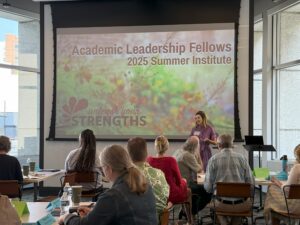
ACM jointly convened the summer institute with the Associated Colleges of the South (ACS) and the New York Six Liberal Arts Consortium (NY6). The event featured interactive presentations, workshops, and breakout sessions facilitated by experts with firsthand knowledge of what it takes to transition from faculty to academic leadership positions. Attendees examined values-based budgeting, discussed strategies to balance stakeholders’ viewpoints, and considered how their relationships with colleagues may change as they take on new positions. They also discussed ways to channel their personal strengths into developing effective leadership styles for periods of institutional change.
Nora A. Lewis, an associate professor of music who recently moved into a leadership position as associate provost at Lawrence University, praised the summer institute and the ACM Academic Leadership Fellows Program. She called the new connections she forged in Chicago “inspiring and motivating.”
“ACM’s approach to leadership training is distinctive, because it recognizes that effective higher education leadership requires an understanding of the institution from multiple perspectives,” Lewis went on to say. “The strengths- and values-focused work we accomplished during the summer institute helped me to connect more deeply with the mission and values of the institution as we move forward with a focus on academic excellence, student outcomes, and financial sustainability.”
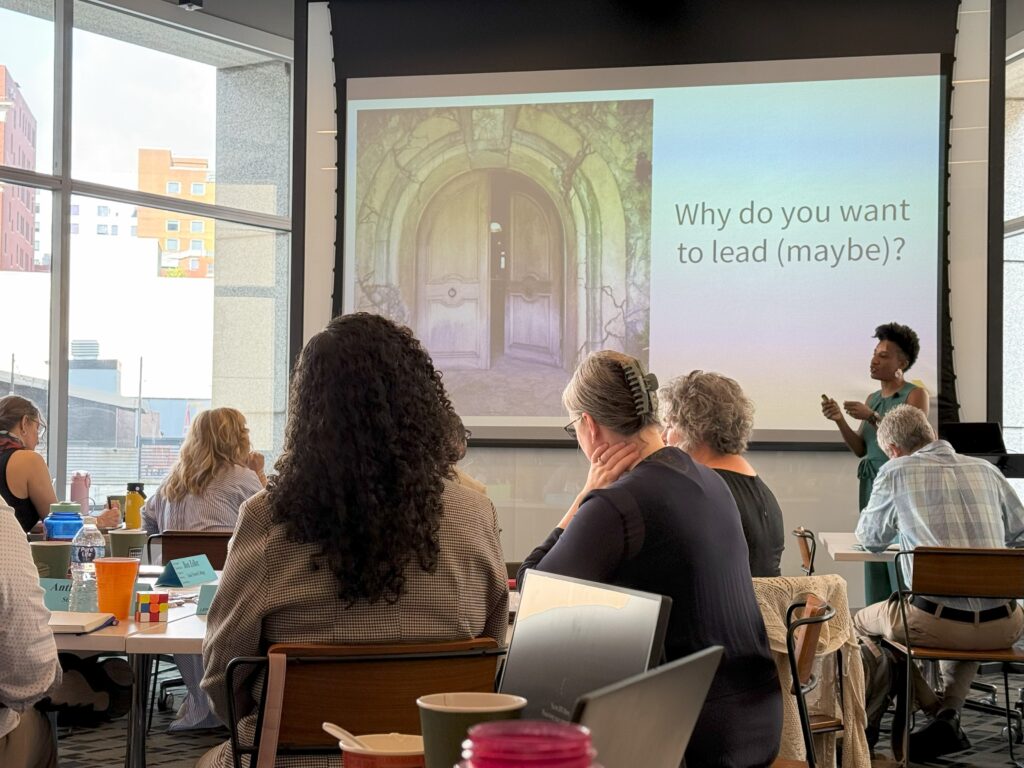
As the president of the Chicago-based host organization, ACM’s Lisa Jasinski facilitated a welcome session at the summer institute and encouraged the participants to approach their fellowships with curiosity and purpose.
“ACM is proud to provide innovative and timely professional development programming to faculty and staff at our member colleges,” Jasinski said, referring to how the recently-launched strategic framework, Together We Go Further: ACM’s Commitment to Excellence Through Collaboration, emphasizes nurturing new leaders for liberal arts education. “I’m confident the humanists who participated in the summer institute have bright futures as academic leaders—at a time when research suggests how higher ed urgently needs to deepen its bench of gifted and thoughtful leaders.”
Each ACM Academic Leadership Fellow receives course release time, an annual $20,000 stipend on top of their regular salaries, and their college is given funding for replacement instructors. The fellows also gain valuable experience managing and completing important projects on their campus—with guidance from mentors matched to them for the duration of the fellowship program.
“This leadership initiative ACM is facilitating has provided a space for dialogue and connection between faculty and staff members in similar roles,” said ACM Academic Leadership Fellow Nick Phillips, a Spanish professor at Grinnell College who also serves as Grinnell’s associate dean of curriculum and academic programs. “Moving forward, this community will be a valuable space to grow and learn for both the individuals participating in the fellowship and for their campuses.”
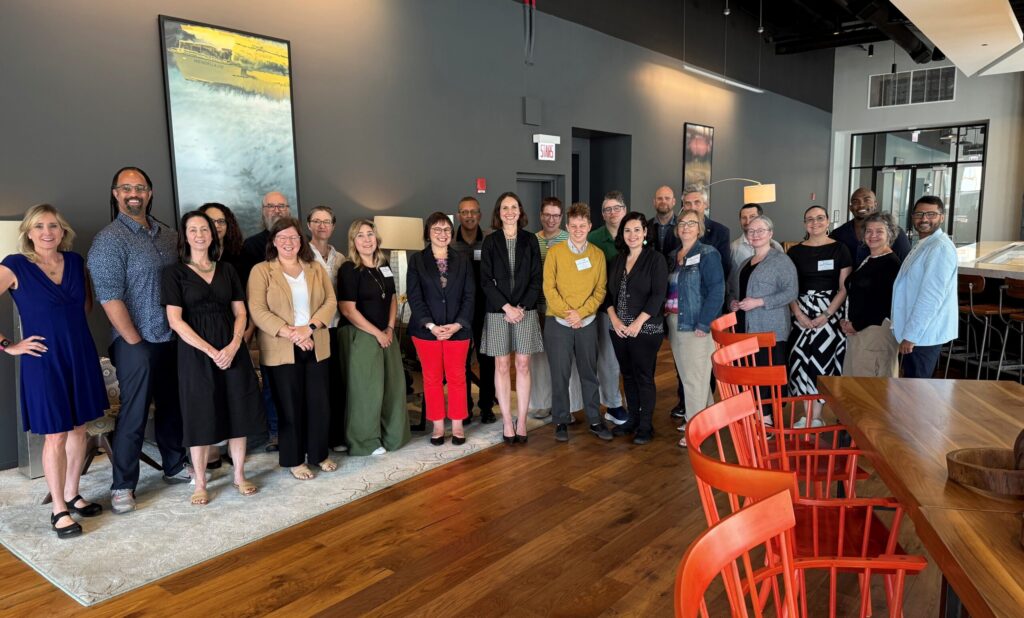
The 2025-2027 ACM Academic Leadership Fellows will attend a winter meeting in early 2026, as well as a second immersive summer institute in 2026 with their counterparts from ACS and NY6.
The ACM Academic Leadership Fellows Program is supported by the Mellon Foundation.