
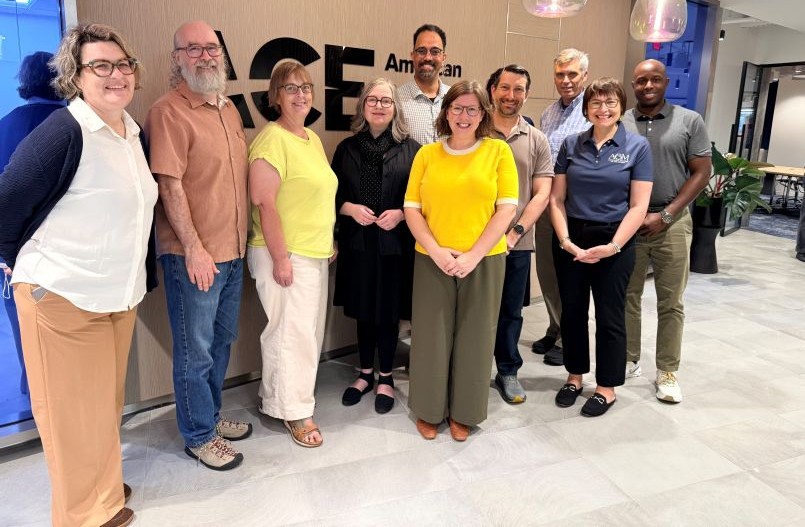
Academic Leadership Fellows from three liberal arts consortia gathered in Washington, D.C., to learn from experienced leaders, engage with timely issues, and consider their own leadership journeys.
For Anthony Bateza, associate professor of religion at St. Olaf College, gaining a clearer view of the many paths that can shape an academic leadership journey may be one of the most inspiring takeaways from the 2026 Summer Institute for Academic Leadership Fellows.
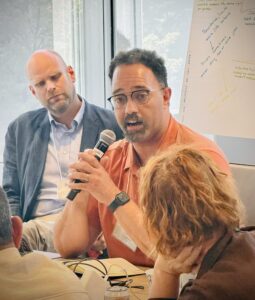
“I’ve learned this interesting balance between intentionality and setting a path, knowing where you want to go in terms of your leadership, and responding to opportunities as they arise,” said Bateza. “I find that kind of freeing.”
Bateza was among the nine ACM Academic Leadership Fellows who joined fellows from the Associated Colleges of the South (ACS) and the New York Six Liberal Arts Consortium (NY6) for the second summer institute of the 2025-2027 fellowship cohort. Co-hosted by the three consortia in Washington, D.C., over three days in July, the immersive gathering offered fellows opportunities to examine the possibilities and complexities of academic leadership while considering how their own experiences and aspirations might shape the paths ahead.
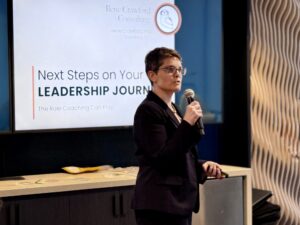
This convening came at a consequential moment as liberal arts colleges face changes in the policy environment alongside ongoing questions about institutional priorities, resources, enrollment, and the future of higher education. Fellows explored these issues through conversations with experienced higher education leaders, case studies, breakout sessions, individual reflection, and discussions of their individual campus projects. They considered how leaders can navigate the current landscape, communicate effectively, and prepare for the opportunities, decisions, and responsibilities that may shape their own leadership journeys.
“The most important thing I’ve learned is I’m not alone in this,” said Bateza, describing the reassurance of connecting with colleagues engaging in similar work. At the same time, seeing the different circumstances facing peer institutions, such as varying resource constraints and enrollment challenges, helped him step outside his own college’s immediate concerns and recognize the wider range of factors shaping higher education. “It’s given me a nice sense of perspective.”
Fellows apply their leadership development to projects that advance priorities on their home campuses. Bateza is exploring ways to make character education and leadership more central to the St. Olaf student experience through academic offerings, co-curricular opportunities, and cohorts connected to a variety of fields.
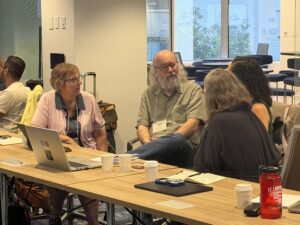
At Beloit College, the impact of the fellowship is also visible in the work of Daniel Youd, professor of Chinese language & literature and associate dean of the college. Donna Oliver, provost and dean of the college, said the program has helped Youd excel in his leadership role. “The knowledge and training gained through the program has given him more confidence to lead with both authority and compassion, earning him the trust and respect of both faculty and senior leadership.”
Academic Leadership Fellows are tenured faculty in the arts, humanities, and humanistic social sciences who were nominated by their institutions and selected through a competitive application process. Over the two-year program, fellows receive a $20,000 annual stipend, course release time, and individualized professional development and mentorship while leading a change initiative on their campus. The program also provides the fellows’ institutions with funding for replacement instructors.
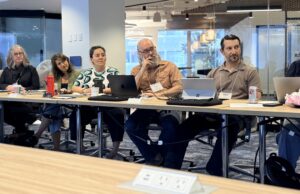
Lynn Murray-Chandler, ACM vice president for programs and professional development, said the fellowship reflects the consortium’s commitment to developing and empowering leaders who shape the future of liberal education.
“It’s so inspiring to see these talented faculty come together, learn from one another, and imagine where their leadership journeys might take them,” Murray-Chandler said. “Each fellow brings a different set of strengths and experiences to the program, and I’m excited to watch them continue to grow in ways that are meaningful to them and their institutions.”
Murray-Chandler also expressed appreciation for the partner consortia, presenters, and facilitators for contributing their expertise to the summer institute and giving fellows a broader range of perspectives as they prepare for the opportunities ahead.
The 2025-2027 ACM Academic Leadership Fellows will gather for their final in-person convening in early 2027 before the program concludes on June 30, 2027.
The ACM Academic Leadership Fellows Program is supported by Mellon.